
Dialogue embraces complexity
So much more fruitful and creative than debate.

The three big ideas I found so helpful in the Schein’s and Isaacs’ articles about Dialogue (references below) were:
1. Their depiction of a compelling pattern of conflict.
2. A distinction between dialogue and debate
3. A simple (but not easy) way to interrupt destructive cycles of conflict.
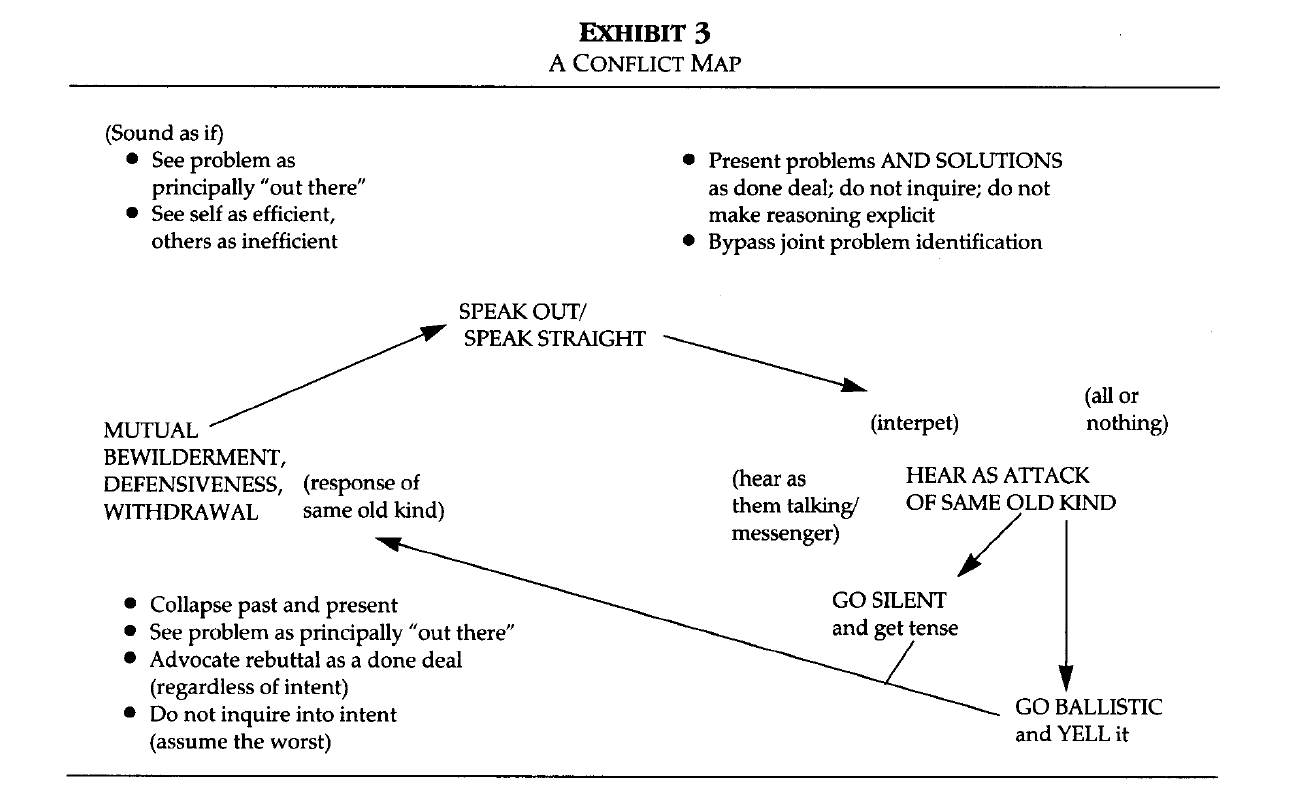
I recognised this pattern as soon as I looked at it, evocative of many habitual patterns I readily fall into. The roles of Speaker and Listener flip back and forth. That's the nature of conversation. As Speaker, I'm learning to notice more quickly when I'm starting to rant so I can stop and be Listener.
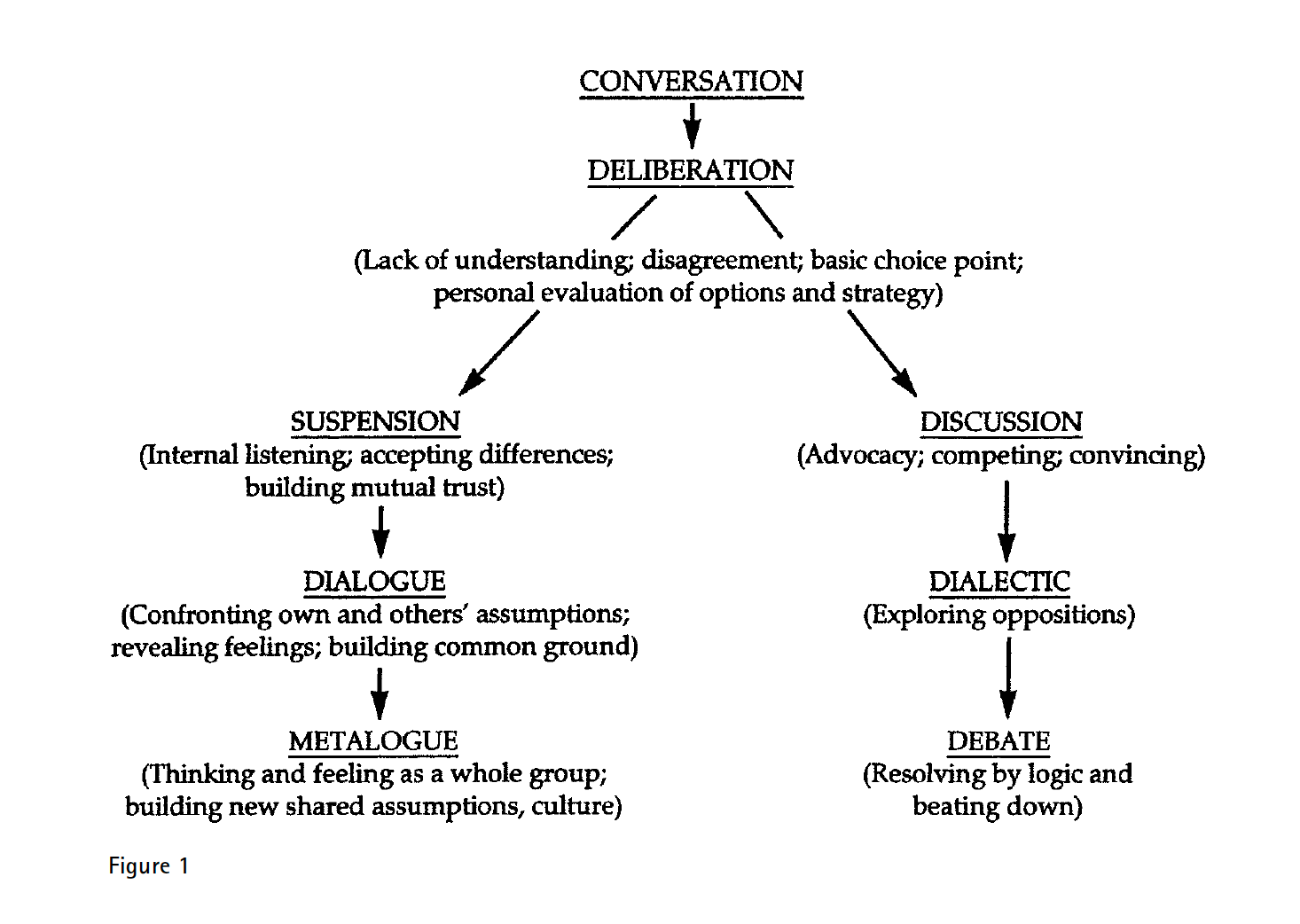
And here is the delightful simplicity of the idea behind dialogue. Do you see the decision point at the fork in the road? The ‘basic choice point'; Suspension', a pause. It's not quite 'Count to 10' which suggests to me a position of "Give me strength ..." with grinding of teeth. It's more the arresting of the reflex, the response they've heard so many times before. It's an opportunity to notice the pattern and escape its gravitational pull.
... and with noticing, the hair trigger on the reflex becomes desensitised and a more thoughtful choosing of response can follow. Most important of all, the Speaker will notice the difference and know that the Listener might actually be listening (for once). The effect can be felt immediately. The whole character of a sterile conversation can change in an instant.
I also love this diagramme representing the three reflexes to be suppressed for proper listening to begin. The steps get more subtle as they go up. You can probably recognise a natural inclination to blame and punish the messenger in response to bad news. More commonplace, when I sense an attack, my instinctive response is to defend, deny, counterattack. Just noticing that something has angered me might lead me to 'Suspend' long enough to pause instead of playing a habitual rant.
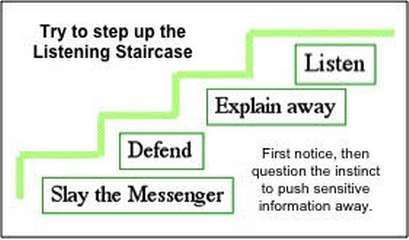
I find the "Yes ... but …" of 'Explaining away' the hardest to let go of. It's a subtler form of defending and tends to come so quickly that our Speaker knows we haven't listened properly. When we do, the effect can be immediate and astonishing. I encourage anyone to try it. Don't despair if it doesn't seem to work. Like any skill, it benefits from practice. Start on something small with someone safe.
Of course, a Listener is not required to swallow everything a Speaker says but they must listen. If they don't, the Speaker will be unable to listen in their turn. This is my belief and it stands behind my assertion that listening is a lot more persuasive than persuading.
It doesn't make any difference whether the inclination to speak is provoked by disagreeing or not understanding. 'Suspending' means sitting with uncertainty, curiosity, doubt, possibility. Even a moment can make a huge difference, opening a door to creative dialogue and leaving behind stale and fruitless debate.
Obviously, when two people are arguing, the best hope for a good outcome is when both are skilled listeners but even one can make a difference. In Across the Red Line on BBC Radio 4, Anne McElvoy invites two people to explore a topic on which they disagree. Gabrielle Rifkind guides them through a process which encourages them to listen more thoughtfully to each other. In many episodes the listening is one-sided and the quality of listening rises and falls and switches between listeners. But there are many occasions when creative possibilities seem to emerge.
Conflict, listening and dialogue
Edgar Schein and William Isaacs were writing brilliantly about the role of dialogue in conflict resolution thirty years ago. I found both these articles a thrilling and accessible read. As luck would have it, the Schein one seems to be available online, thanks to the University of Utah
Schein, E.H., 1993. On dialogue, culture, and organizational learning. Organizational dynamics, 22(2), pp.40-51.
Isaacs, W.N., 1993. Taking flight: Dialogue, collective thinking, and organizational learning. Organizational dynamics. 22(2), pp.24-39.
.
How different yesterday’s explosive meeting at The White House could have been if there had been some listening.
I saw the interview myself and agree with you about the man's integrity and courage under fire. Unfortunately, I kept being distracted by worries about his and his family's security. Alexi Navalny's example kept coming to mind.
Down in Edinburgh at the moment and trying to understand and sort out my son's heating system while he's away. Some reprogramming of the boiler has been necessary to cope with the winter chill. More Luddite thoughts come to mind about over- complex systems and it being so much easier to put some coal or wood on the fire!